 akash.verma@cenmed.com
 (732) 447-1115

General description
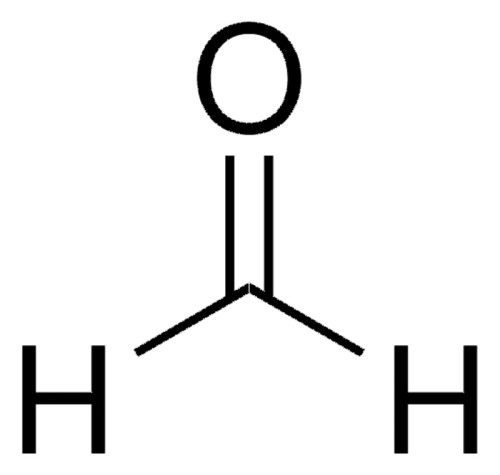
Formaldehyde, a colorless, pungent-smelling chemical, finds extensive application in various biological research and laboratory settings. Primarily supplied as a 37% solution (formalin), its diverse uses range from tissue preservation and sterilization to acting as a denaturant in RNA gel electrophoresis. However, it′s crucial to acknowledge its potential health risks and handle it with appropriate precautions.Multifaceted Functions:
- Preservative: Formaldehyde′s ability to inhibit microbial growth makes it an effective preservative in biological samples, preventing decay and ensuring their integrity for further analysis. This property finds application in medical laboratories, museums, and even embalming fluids.
- Fixative: In histology, formaldehyde acts as a fixative, cross-linking proteins and preserving tissue structures for microscopic examination. This allows researchers to visualize anatomical details and cellular components with remarkable clarity.
- Denaturant: In molecular biology techniques like formaldehyde-agarose gel electrophoresis, formaldehyde denatures RNA molecules, preventing them from forming secondary structures and enabling size-based separation. This technique proves invaluable for studying gene expression and RNA integrity.
Application
Formaldehyde solution has been used for fixing of cells and tissue sections. It has been used in the formaldehyde agarose gel electrophoresis. Formaldehyde is used as a denaturant in formaldehyde-agarose gel electrophoresis of RNA.
Features and Benefits
- Versatile and adaptable for a wide variety of laboratory and research applications
- Suitable for Molecular Biology and Biochemical applications
Analysis Note
Tested for use in formaldehyde-agarose gel electrophoresis of RNA.
Molecular Weight: 30.03. Empirical Formula: CH2O. linearFormula: HCHO. grade: for molecular biology. Quality Level: 100. vapor density: 1.03 (vs air). vapor pressure: 52 mmHg ( 37 °C). form: liquid. autoignition temp.: 572 . °F. contains: 10-15% methanol. concentration: 36.5-38% in H2O. density: 1.09 . g/mL . at 25 . °C (lit.). suitability: suitable for (use in Formaldehyde-Agarose Gel Electrophoresis of RNA). storage temp.: 15-25°C. SMILES string: [H]C([H]): O. InChI: 1S/CH2O/c1-2/h1H2. InChI key: WSFSSNUMVMOOMR-UHFFFAOYSA-N. Pictograms: GHS02,GHS05,GHS06,GHS08. Signal Word: Danger. Hazard Statements: H226 - H301 + H311 - H314 - H317 - H330 - H335 - H341 - H350 - H370. Precautionary Statements: P202 - P210 - P280 - P303 + P361 + P353 - P304 + P340 + P310 - P305 + P351 + P338. Hazard Classifications: Acute Tox. 2 Inhalation - Acute Tox. 3 Dermal - Acute Tox. 3 Oral - Carc. 1B - Eye Dam. 1 - Flam. Liq. 3 - Muta. 2 - Skin Corr. 1B - Skin Sens. 1 - STOT SE 1 - STOT SE 3. Target Organs: Respiratory system. Storage Class Code: 3 - Flammable liquids. WGK: WGK 3. Flash Point(F): 133.0 °F - closed cup. Flash Point(C): 56.11 °C - closed cup.- UPC:
- 12352501
- Condition:
- New
- HazmatClass:
- Yes
- MPN:
- F8775-25ML
- CAS:
- 50-00-0