akash.verma@cenmed.com
 (732) 447-1115
-
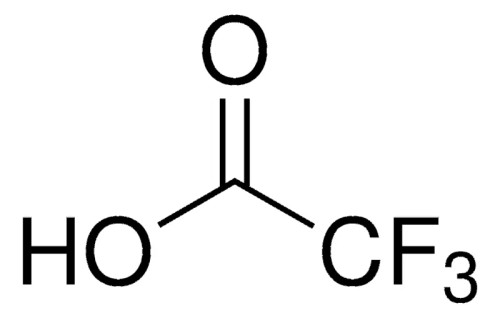 900666-100MLTrifluoroacetic acid (TFA) is a nonaqueous solvent. At room temperature, TFA has the ability to liquify native and regenerated celluloses.
 -
 471348-1LThe product is a 70% aqueous solution of methanesulfonic acid (MSA). MSA is a strong organic acid.
 -
 1000204000LiChrosolv ® solvents show high degree of UV transmittance, low particle count, low acidity and alkalinity and low evaporation residue level. This makes them ideal for reproducible separations.
 -
 1000202500LiChrosolv ® solvents show high degree of UV transmittance, low particle count, low acidity and alkalinity and low evaporation residue level. This makes them ideal for reproducible separations.
 -
 1000201000LiChrosolv ® solvents show high degree of UV transmittance, low particle count, low acidity and alkalinity and low evaporation residue level. This makes them ideal for reproducible separations.
 -
 1000129030SupraSolv ECD and FID is specially developed for gas chromatography in combination with ECD (Electron Capture Detetor) and FID (Flame Ionization detector). SupraSolv solvents offer the largest specified retention time range, a clear baseline and a
 -
 54362-1LApplication ICP solvent is low odor and reduced toxicity equivalent to classical kerosene or xylene and ideal for dilution of oils and other organic fluids for determination of metal traces.
 -
 417246-50MLDimethylzinc (Zn(CH 3 ) 2 ) is a methylating reagent used to prepare methylated organic compounds as well as organometallic compounds containing methyl groups . It is also utilized as a reagent to prepare amino alcohols, oximes, and hydrazones from
 -
 364401-50MLApplication Dimethylzinc can be used as: A catalyst with nickel for the stereoselective C𕒶 alkenylation and dialkenylation of pyridine derivatives by alkynes to give monoalkenylation products. A reagent with aldehydes and 2-methoxyaniline
 -
 364401-500MLApplication Dimethylzinc can be used as: A catalyst with nickel for the stereoselective C𕒶 alkenylation and dialkenylation of pyridine derivatives by alkynes to give monoalkenylation products. A reagent with aldehydes and 2-methoxyaniline
 -
 700762-250MGApplication ( S )-SIPHOS-PE is a chiral spiro phosphoramidate ligand that can be used to synthesize: Spiroindolenines by Pd-catalyzed intramolecular dearomative arylation of haloaryl-3-substituted indoles. Enantioselective conjugate addition
 -
 715166-1GOctadecylphosphonic acid (OPA) is used as a self-assembled monolayer that forms a surfactant which strongly bonds with the surface atoms of different metal oxides. It provides hydrophobic properties and covers a higher surface area than the