 akash.verma@cenmed.com
 (732) 447-1115

General description
The transforming growth factor-β2 (TGFB2) gene is mapped to human chromosome 1q41. The encoded protein is localized to extracellular matrix. TGF-β2 is a member of the TGF-β superfamily. TGF-β exists in three isoforms (TGF-β1, TGF-β2 and TGF-β3) and are known to share similar structure and function.
Application
Transforming Growth Factor-β2 human has been used in chondrogenic, adipogenic and osteogenic differentiation of mesenchymal stem cells. It has also been used to induce extracellular matrix accumulation in primary human trabecular meshwork cells and further to study the action of tetramethylpyrazine on the same.
Biochem/physiol Actions
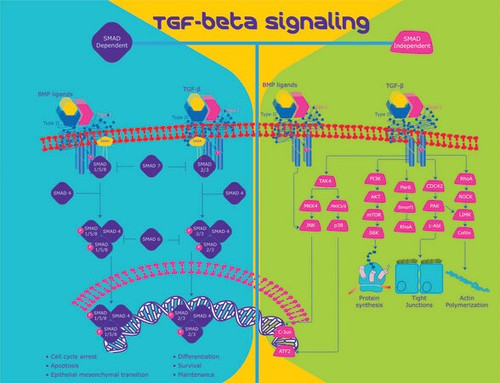
TGF-β2 is known to stimulate cell growth, differentiation, migration and survival. TGF-β2 acts as a key regulator for immune homeostasis by controlling lymphocyte proliferation, embryogenesis, hematopoiesis and apoptosis. TGF-β is also associated with inflammation and wound healing and is considered as a strong growth inhibitor for keratinocyte cells. TGF-β is associated with the process of tumor development, progression and metastasis. TGF-β2 is a tumor suppressor in the early stages of carcinogenesis, but in the later stages acts as a tumor promoter by inducing epithelial-mesenchymal transition and stimulating angiogenesis. The TGF-β gene is overexpressed in glioma tumors and also in colon cancer, gastric cancer and cervical lesions.
Transforming growth factor-β2 (TGF-β2), like TGF-β1, is produced by many cell types and reported to be most concentrated in mammalian platelets.
Physical form
Lyophilized from a 0.2 μm filtered solution in 30% acetonitrile and 0.1% trifluoroacetic acid containing 0.1 mg bovine serum albumin
Analysis Note
The biological activity is measured by its ability to inhibit the IL-4-dependent proliferation of mouse HT-2 cells.
- UPC:
- 51131907
- Condition:
- New
- HazmatClass:
- No
- MPN:
- T2815-2UG