 akash.verma@cenmed.com
 (732) 447-1115

General description
The TGFB1 gene is mapped to human chromosome 19q13.2 and codes for a 25 kDa peptide. TGF-ß1 polypeptide is produced as a precursor with hydrophobic signal sequence, pro-region and mature peptide. Cleavage of the precursor at tetrabasic cleavage site results in monomers of carboxy-terminal 112 amino acids. The biologically active form of Tgfb1 exists as a disulphide-linked homodimer.
Application
Transforming Growth Factor-β1 (TGF-β) human has been used :
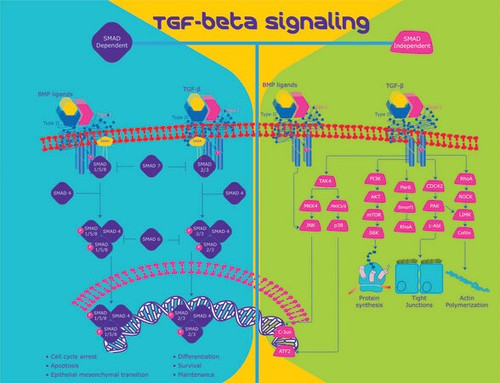
- to study the expression of PDGFRB (Platelet derived growth factor receptor β) in association with transforming growth factor-β signaling.
- to stimulate lung fibrosis in human fetal lung fibroblast cell line in order to further measure the in-plane elasticity of live cell layers using a pressure sensor embedded microfluidic device.
- to study the effect of TGF-β on HTRA1 (high-temperature requirement A1)-affected Wnt target genes.
Biochem/physiol Actions
TGF-β1 is a multifunctional peptide capable of influencing cell proliferation, differentiation, and other functions in a wide range of cell types. Transformed as well as non-neoplastic tissues release transforming growth factors and essentially all cells possess a specific TGF-β1 receptor. In general, cells of mesenchymal origin appear to be stimulated by TGF-β1; whereas, hepatocytes, T and B lymphocytes, keratinocytes, and many epithelial cells are inhibited by the peptide. TGF-β1 interacts with Epidermal Growth Factor (EGF), Platelet Derived Growth Factor (PDGF), Fibroblast Growth Factor (FGF), and T Cell Growth Factor (T-CGF) either by enhancing or antagonizing their characteristic actions. TGF-β1 plays a fundamental role in tissue growth and differentiation by involvement in adipogenesis, myogenesis, chondrogenesis, osteogenesis, epithelial cell differentiation, and immune cell function. TGF-β1 is associated with the developmental and metastasis of colorectal cancer.
Transforming growth factor-β1 (TGF-β1) is produced by many cell types, but is reported to be most concentrated in mammalian platelets, where it is present at approximately four times the level of TGF-β2.
Physical form
Lyophilized from a 0.2 μm filtered solution of 50 mM NaOAc pH 4.5
Preparation Note
HumanKine TGF-β1 is expressed in human HEK 293 cells as a mature, disulfide linked, non- glycosylated, homodimer with a predicted molecular mass of 25 kDa.
Analysis Note
The specific activity was determined by the dose dependent inhibition of IL-4 induced proliferation of mouse HT-2 cells (BALB/c spleen activated by sheep erythrocytes in the presence of IL-2).
Legal Information
HumanKine is a registered trademark of Proteintech Group, Inc. and Humanzyme, Inc
biological source: human. Quality Level: 300. recombinant: expressed in HEK 293 cells. Assay: ≥. 95% (SDS-PAGE). form: lyophilized powder. potency: ≤. 0.5 . ng/mL EC50. quality: endotoxin tested. mol wt: dimer 25 . kDa (non-glycosylated). packaging: pkg of 100 . μ. g, pkg of 5 . μ. g. storage condition: avoid repeated freeze/thaw cycles. technique(s): cell culture | mammalian: suitable. impurities: ≤. 1 . EU/μ. g. UniProt accession no.: P01137. storage temp.: -10 to -25°C. Gene Information: human ... TGFB1(7040). Pictograms: GHS05. Signal Word: Danger. Hazard Statements: H314. Precautionary Statements: P260 - P280 - P303 + P361 + P353 - P304 + P340 + P310 - P305 + P351 + P338 - P363. Hazard Classifications: Eye Dam. 1 - Skin Corr. 1B. Storage Class Code: 8A - Combustible, corrosive hazardous materials. WGK: WGK 2. Flash Point(F): Not applicable. Flash Point(C): Not applicable.- UPC:
- 41106503
- Condition:
- New
- HazmatClass:
- No
- MPN:
- H8541-5UG