 akash.verma@cenmed.com
 (732) 447-1115

General description
4-Chlorophenol undergoes dechlorination to phenol rapidly on palladized graphite electrodes. Mechanism of 4-chlorophenol oxidation has been investigated by radiolytic and photocatalytic techniques.
Application
4-Chlorophenol was used:
- As a substrate in the visible-light-induced degradation studies of phenolic compounds in an aqueous suspension of pure TiO2.
- As a model chlorinated organic pollutant in the hydrodechlorination studies of phenols using palladium nanocrystal catalysts.
- To prepare 4-chlorocatechol, hydroquinone, and benzoquinone via photo mineralization using Degussa P25 TiO2.
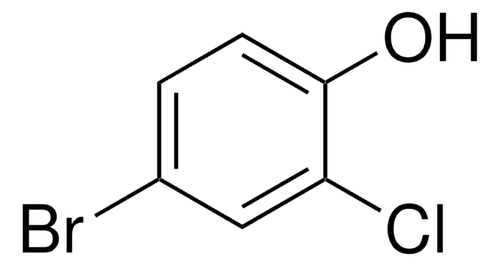
Molecular Weight: 128.56. Empirical Formula: C6H5ClO. linearFormula: ClC6H4OH. vapor pressure: 1 mmHg ( 49.8 °C). Quality Level: 200. Assay: ≥. 99%. form: solid. impurities: <. 1.0% Phenol. bp: 220 . °C (lit.). mp: 42-45 . °C. solubility: ethanol: soluble 50 . mg/mL, clear to very slightly hazy, colorless to faintly brownish-yellow. density: 1.306 . g/mL . at 25 . °C (lit.). SMILES string: Oc1ccc(Cl)cc1. InChI: 1S/C6H5ClO/c7-5-1-3-6(8)4-2-5/h1-4,8H. InChI key: WXNZTHHGJRFXKQ-UHFFFAOYSA-N. Pictograms: GHS05,GHS07,GHS09. Signal Word: Danger. Hazard Statements: H302 + H312 + H332 - H314 - H411. Precautionary Statements: P260 - P273 - P280 - P303 + P361 + P353 - P304 + P340 + P310 - P305 + P351 + P338. Hazard Classifications: Acute Tox. 4 Dermal - Acute Tox. 4 Inhalation - Acute Tox. 4 Oral - Aquatic Chronic 2 - Eye Dam. 1 - Skin Corr. 1B. Storage Class Code: 6.1C - Combustible, acute toxic Cat.3 / toxic compounds or compounds which causing chronic effects. WGK: WGK 2. Flash Point(F): 249.8 °F - closed cup. Flash Point(C): 121 °C - closed cup. Personal Protective Equipment: dust mask type N95 (US), Eyeshields, Gloves.
- UPC:
- 51101905
- Condition:
- New
- HazmatClass:
- Yes
- MPN:
- 185787-100G
- CAS:
- 106-48-9