 akash.verma@cenmed.com
 (732) 447-1115

Application
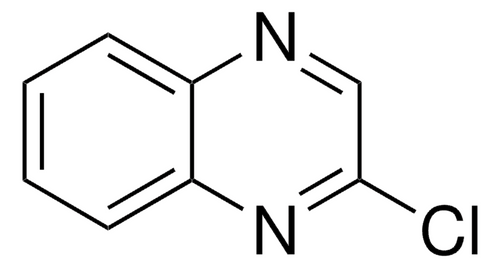
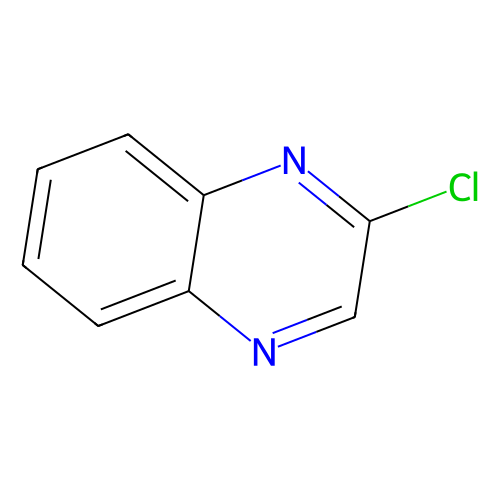
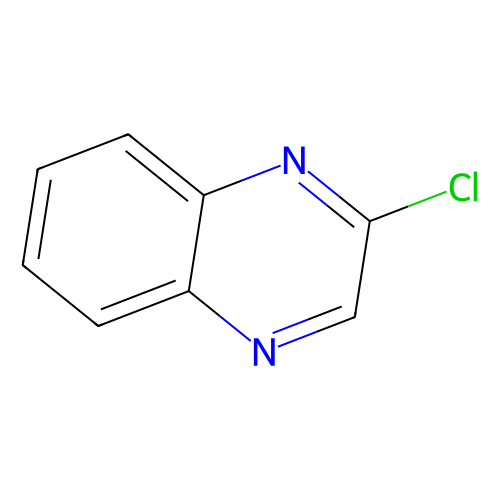
2-Chloroquinoxaline (QCI) was used to study the effect of solvent on hydrolysis of QCI in aqueous–organic solvent mixtures with acetonitrile and dimethylesulphoxide. It was used in the synthesis of 2-(3-butynyl-2-methyl-2-ol) quinoxaline.It was used as reagent in the synthesis of chloroquinoxaline sulfamide.
Molecular Weight: 164.59. Empirical Formula: C8H5ClN2. Quality Level: 100. Assay: 98%. bp: 100 . °C/1.4 . mmHg (lit.). mp: 47-50 . °C (lit.). SMILES string: Clc1cnc2ccccc2n1. InChI: 1S/C8H5ClN2/c9-8-5-10-6-3-1-2-4-7(6)11-8/h1-5H. InChI key: BYHVGQHIAFURIL-UHFFFAOYSA-N. Pictograms: GHS07. Signal Word: Warning. Hazard Statements: H302 - H315 - H319 - H335. Precautionary Statements: P261 - P264 - P271 - P301 + P312 - P302 + P352 - P305 + P351 + P338. Hazard Classifications: Acute Tox. 4 Oral - Eye Irrit. 2 - Skin Irrit. 2 - STOT SE 3. Target Organs: Respiratory system. Storage Class Code: 11 - Combustible Solids. WGK: WGK 3. Flash Point(F): Not applicable. Flash Point(C): Not applicable. Personal Protective Equipment: dust mask type N95 (US), Eyeshields, Faceshields, Gloves.- UPC:
- 51101905
- Condition:
- New
- HazmatClass:
- No
- MPN:
- 136301-5G
- CAS:
- 1448-87-9