akash.verma@cenmed.com
 (732) 447-1115
-
-
-
-
-
-
-
 P1342100-5mgpara-iodoHoechst 33258 is a marker dye in Hoechst series. Hoechst is A live nuclear marker dye. Hoechst binds to the grooves in the DNA double strand, which tends to be A/ T-rich DNA strand. Although it binds to all nucleic acids, the A/ T-rich
 -
 P1342100-1mgpara-iodoHoechst 33258 is a marker dye in Hoechst series. Hoechst is A live nuclear marker dye. Hoechst binds to the grooves in the DNA double strand, which tends to be A/ T-rich DNA strand. Although it binds to all nucleic acids, the A/ T-rich
 -
 P1342100-10mgpara-iodoHoechst 33258 is a marker dye in Hoechst series. Hoechst is A live nuclear marker dye. Hoechst binds to the grooves in the DNA double strand, which tends to be A/ T-rich DNA strand. Although it binds to all nucleic acids, the A/ T-rich
 -
 E1288606-1mgZedoarondiol, a sesquiterpene lactone compound, with antioxidant and anti-inflammatory activity. Zedoarondiol can be used for atherosclerosis research .
 -
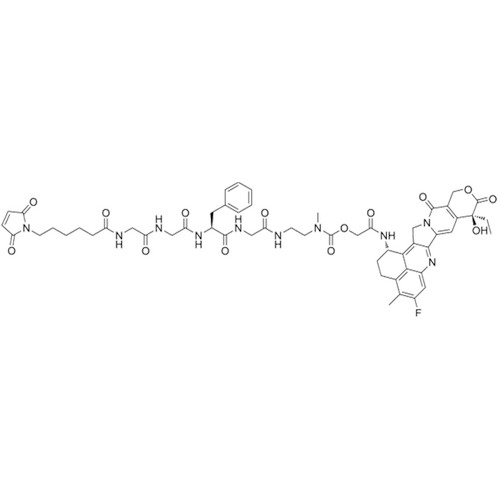 L1371998-1mgLE01 is a drug-linker conjugate for ADC. LE01 contains a ADC linker and a DNA topoisomerase I inhibitor DXd (HY-13631D).
 -
 A276027-1mgLanabecestat (AZD3293) is a highly potent and highly permeable BACE1 inhibitor (Ki: 0.4 nM) that crosses the blood-brain barrier, Lanabecestat can be used for the study of neurological diseases like Alzheimer's disease.