akash.verma@cenmed.com
 (732) 447-1115
-
 P44511These are the most rugged silica gel plates available. They not only ease handling and sample application, but also permit the use of up to 80%: water in the developing solvent without loss of adherence of the adsorbent layer to the glass plate.
 -
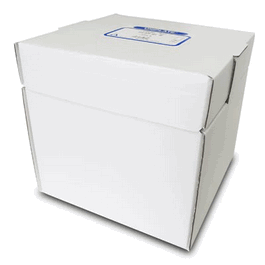 P29031These silver nitrate impregnated silica gel plates are for argentation chromatography. They are impregnated with silver nitrate between 5%: and 20%:, which modifies the separation characteristics of the adsorbent layer to permit increased
 -
 P29021These silver nitrate impregnated silica gel plates are for argentation chromatography. They are impregnated with silver nitrate between 5%: and 20%:, which modifies the separation characteristics of the adsorbent layer to permit increased
 -
 P21521These plates are 100%: H<sub>2</sub>O resistant and are compatible with aqueous developing solvents. They are less rugged than the plates with organic binder but still provide improved handling and sample application compared to Silica Gel G
 -
 P21021These plates are 100%: H<sub>2</sub>O resistant and are compatible with aqueous developing solvents. They are less rugged than the plates with organic binder but still provide improved handling and sample application compared to Silica Gel G
 -
 P11521These plates are 100%: H<sub>2</sub>O resistant and are compatible with aqueous developing solvents. They are less rugged than the plates with organic binder but still provide improved handling and sample application compared to Silica Gel G
 -
 P02521These plates are the most widely used silica gel TLC plates. No organic substances are added to these products, thus making them compatible with sulfuric acid charring visualization.<br><br>These plates are commonly scraped from the glass backing to
 -
 P02021These plates are the most widely used silica gel TLC plates. No organic substances are added to these products, thus making them compatible with sulfuric acid charring visualization.<br><br>These plates are commonly scraped from the glass backing to
 -
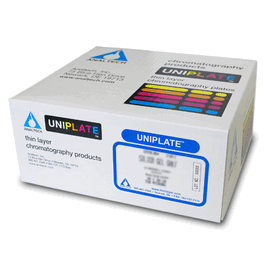 P02014These plates are the most widely used silica gel TLC plates. No organic substances are added to these products, thus making them compatible with sulfuric acid charring visualization.<br><br>These plates are commonly scraped from the glass backing to
 -
 P02005These plates are the most widely used silica gel TLC plates. No organic substances are added to these products, thus making them compatible with sulfuric acid charring visualization.<br><br>These plates are commonly scraped from the glass backing to
 -
 P02003These plates are the most widely used silica gel TLC plates. No organic substances are added to these products, thus making them compatible with sulfuric acid charring visualization.<br><br>These plates are commonly scraped from the glass backing to
 -
 P02001These plates are the most widely used silica gel TLC plates. No organic substances are added to these products, thus making them compatible with sulfuric acid charring visualization.<br><br>These plates are commonly scraped from the glass backing to