akash.verma@cenmed.com
 (732) 447-1115
-
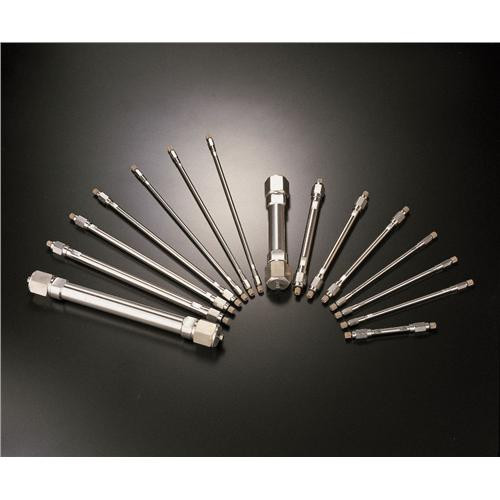 YOA6100-1508SUMICHIRAL OA columns are high-performance chiral columns for enantiomer separation by HPLC. On SUMICHIRAL OA columns direct separation of various enantiomers can be realized effectively.
 -
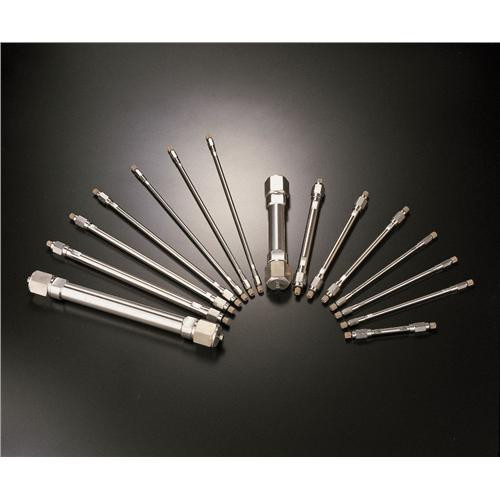 YOA6000-1508SUMICHIRAL OA columns are high-performance chiral columns for enantiomer separation by HPLC. On SUMICHIRAL OA columns direct separation of various enantiomers can be realized effectively.
 -
 YOA5000L-1508SUMICHIRAL OA columns are high-performance chiral columns for enantiomer separation by HPLC. On SUMICHIRAL OA columns direct separation of various enantiomers can be realized effectively.
 -
 YOA5000-1508SUMICHIRAL OA columns are high-performance chiral columns for enantiomer separation by HPLC. On SUMICHIRAL OA columns direct separation of various enantiomers can be realized effectively.
 -
 PH12S05-1030WTPhenyl columns provide unique selectivity when compared to aliphatic straight chain reversed phases such as ODS, C8 and C4. The p electrons of the phenyl group can interact with the aromatic ring of an analyte to increase retention relative to
 -
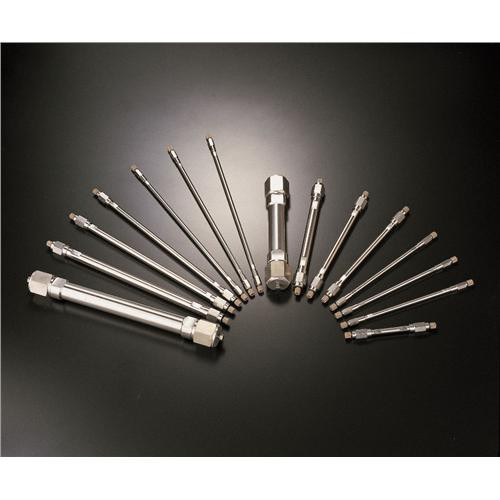 PH12S05-2520WTPhenyl columns provide unique selectivity when compared to aliphatic straight chain reversed phases such as ODS, C8 and C4. The p electrons of the phenyl group can interact with the aromatic ring of an analyte to increase retention relative to
 -
 PH12S05-1520WTPhenyl columns provide unique selectivity when compared to aliphatic straight chain reversed phases such as ODS, C8 and C4. The p electrons of the phenyl group can interact with the aromatic ring of an analyte to increase retention relative to
 -
 DN06S05-2520WTYMC-Pack Diol-NP shows retention behavior of normal-phase chromatography when it is used with low-polarity mobile phases. Hydroxyl groups on the surface of the stationary phase act as polar groups.
 -
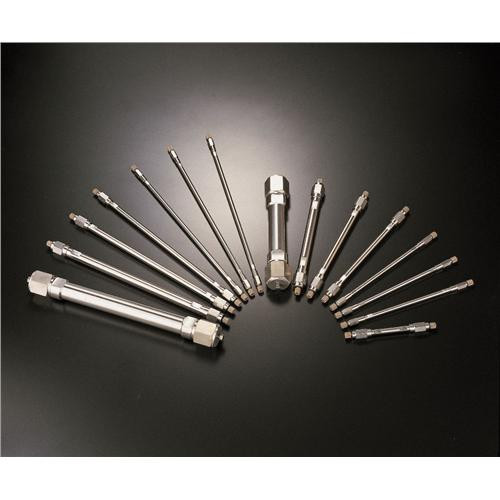 PH12S11-2520WTPhenyl columns provide unique selectivity when compared to aliphatic straight chain reversed phases such as ODS, C8 and C4. The p electrons of the phenyl group can interact with the aromatic ring of an analyte to increase retention relative to
 -
 PH12S21-2520WTPhenyl columns provide unique selectivity when compared to aliphatic straight chain reversed phases such as ODS, C8 and C4. The p electrons of the phenyl group can interact with the aromatic ring of an analyte to increase retention relative to
 -
 PH12S16-2520WTPhenyl columns provide unique selectivity when compared to aliphatic straight chain reversed phases such as ODS, C8 and C4. The p electrons of the phenyl group can interact with the aromatic ring of an analyte to increase retention relative to
 -
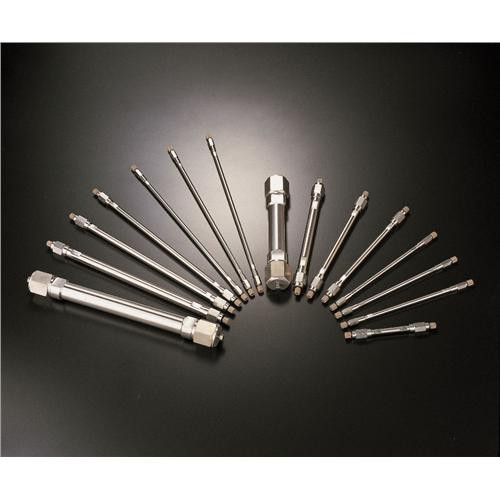 PH12S05-L530WTPhenyl columns provide unique selectivity when compared to aliphatic straight chain reversed phases such as ODS, C8 and C4. The p electrons of the phenyl group can interact with the aromatic ring of an analyte to increase retention relative to